Saath envisions inclusive and empowered communities and individuals
To make human settlements equitable living environments where all residents and vulnerable people have access to health, education, essential infrastructure services and livelihood options, irrespective of their economic and social status.
From the bustling streets of urban India to the underserved pockets of rural communities, Saath Charitable Trust has built a strong presence across multiple states, with a deep-rooted foundation in Ahmedabad, Gujarat.
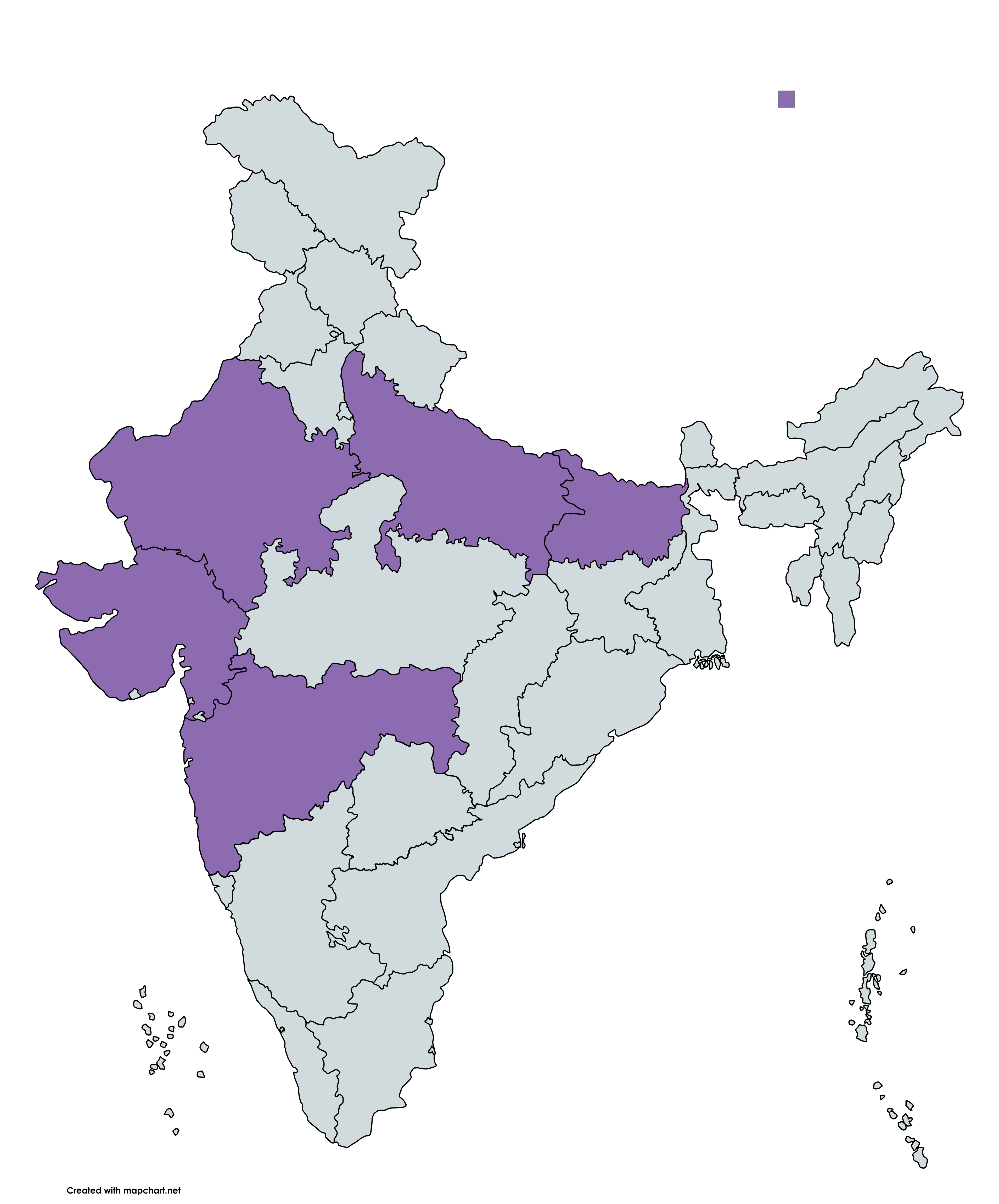
Over the past three decades, Saath’s work has expanded from a single slum in Ahmedabad to a broad network of interventions across Gujarat, Rajasthan, Maharashtra, Uttar Pradesh, and Bihar—impacting lives in both metropolitan cities and remote villages.
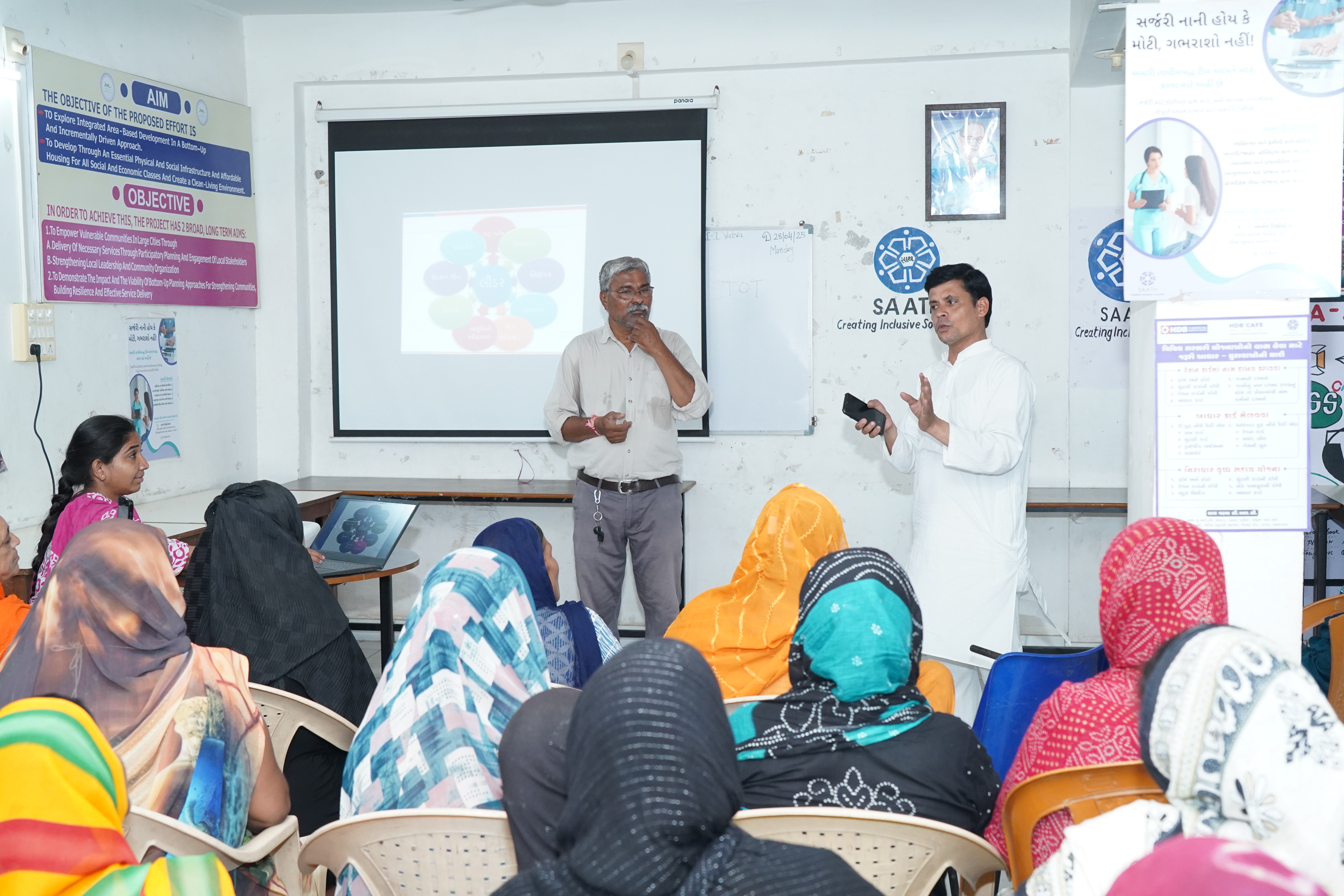
Through a decentralized and participatory approach, we ensure that each region’s unique social, cultural, and economic context is respected and integrated into program design. Whether we work in urban settlements or tribal belts, our focus remains the same: empowering people, building dignity, and creating pathways to self-reliance.
Saath Charitable Trust was founded in 1989 in Ahmedabad, when a group of passionate individuals came together to address the stark inequalities in urban slums and neglected communities. Their shared belief was simple yet powerful — that development must include everyone, especially those most often left behind. Inspired by the idea that real change starts at the grassroots, Saath was created as a platform to work with communities, not just for them.
The early 1990s marked a period of rapid urbanization and economic growth in India. But while cities expanded and markets flourished, thousands of families were left without access to basic services — healthcare, education, clean housing, and livelihoods. Saath recognized this gap and stepped in to bridge it, adopting a model that integrates multiple services for holistic community development.
With time, Saath evolved into a dynamic and deeply rooted social institution. What began as a small initiative grew into a movement — reaching slum dwellers, street vendors, migrant families, youth, women, children, and marginalized workers across Gujarat and other parts of India. Our work has always focused on dignity, inclusion, and opportunity.
The journey hasn’t been easy. We have often chosen the unconventional path — designing people-first programs, co-creating solutions with communities, applying professional management principles to development, and pioneering the concept of civic-driven change. But each challenge has only strengthened our resolve.
Today, Saath stands as a testimony to the power of partnership — between people, purpose, and progress.
In early 1989, three friends, Pradeep Seth, Robert David and Rajendra Joshi decided to form a NGO called Saath. They had a vision of integrated slum development through which communities could be transformed and mainstreamed into Ahmedabad city.
Pradeep Seth had his own business and was Reporter with ALL INDIA REPORTER and was associated with St Xavier's Social Service Society. Robert and Rajendra had earlier worked with the same NGO.
It was a challenging task. As a start-up Saath did not have an office or secured formal funding. The founders had a purpose and enthusiasm. The initial meeting and brainstorming happened at the Gujarat Club and a canteen in the Gujarat University guest house.
The first task of registering Saath with the Charity Commissioner was completed on 28th February 1989. Then the search for support and resources started. The founders put in their own resources and garnered assistance from friends and family. We got an office and basic office equipment at Tej Apartments at Thaltej. Pradeep provided the initial working capital and helped in opening of a bank account.
Robert and Rajendra started scouting for low income settlements in Ahmedabad where Saath could start its activities. They finally selected Sankalchand Mukhi ni Chali (SMC) in Behrampura for Saath's initial activities.
The programme in SMC was aimed at empowering youth so that they could enhance the quality of life in SMC and partner with Saath. The initial activities were sports, camping and conducting a socio-economic survey.
Pradeep through his friends, The Bakeri family managed to get a large open field at Sughad near Narmada canal area to conduct 2-3 day camps. Youth from SMC attended these camps and formed a youth group called Ekta Yuvak Mandal (EYM). Robert designed the activities in the camps and Pradeep managed the logistics – tents, food supplies, bedding and equipment.
Fund raising was a big challenge in the first 3 years. We managed to secure formal funding from Oxfam, HIMOS and Indo-German Social Service Society. Saath worked with UNICEF and sold cards to raise funds.
Prof Dr Dwijendra Tripathi, a mentor and family friend of Pradeep, was invited to be a Trustee to add credibility to the organization.In 1995, the pioneering Slum Networking Project started in Sanjaynagar. Research study and report on the use of recycled building material in Ahmedabad.
With these resources, Saath was able to recruit staff and conduct activities. With guidance from Robert, members of the Ekta Yuvak Mandal took up the challenge of ensuring all houses in SMC had a toilet. EYM then succeeded in reducing Tuberculosis incidence in SMC.
Saath continues its work across Gujarat and Rajasthan.
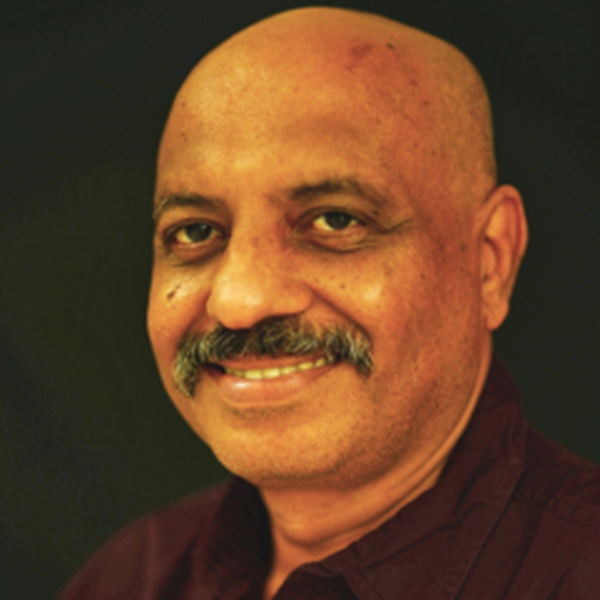
Founder and Managing Trustee, SAATH
With over 37 years of experience working with underserved communities across urban and rural India, he has led pioneering initiatives in slum development and sustainable livelihoods, impacting over 10 lakh individuals. His work focuses on building integrated, community-led solutions across livelihoods, education, healthcare, climate resilience, and financial inclusion. An Ashoka Fellow and recipient of the Schwab Social Entrepreneur Award, his work focuses on building dignified and inclusive pathways for the poor communities and contributing to thriving, resilient communities.
Trustee, SAATH
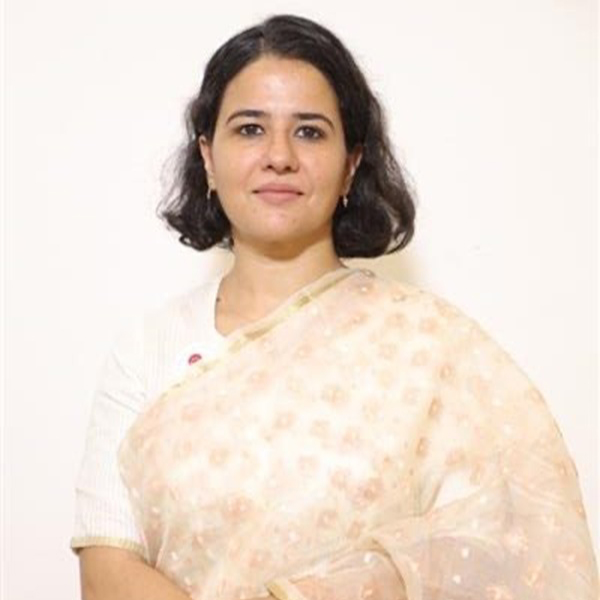
Senior Director, Companion Animals & Engagement at Humane World for Animals India, where she has been associated since 2011. She has led large teams and programs focused on humane and scientific dog population management and community engagement, supporting initiatives across India, Asia, and Africa. She brings over 15 years of experience in development practice, with work spanning community mobilization, youth development, livelihoods, and social inclusion, including pioneering efforts in non-traditional livelihoods for women and rural artisan market platforms. Keren holds a Master's degree in Social Work from the Tata Institute of Social Sciences, Mumbai, and is an Aspen Institute Fellow (Emerging Leaders in Development) as well as an alumna of the Leadership Academy (Janvikas) and the American Express Leadership Program.
Chairperson, SAATH
An economist by training, he brings over four decades of experience in academia, research, and policy advisory in the areas of entrepreneurship development, small and medium enterprises (SMEs), and economic development. He currently serves as Vice Chancellor of L. J. University, Ahmedabad, and has previously held leadership roles at the Indian Institute of Management Lucknow and the Entrepreneurship Development Institute of India (EDI), Ahmedabad. He has authored over 60 research papers, eight books, and numerous research reports, and has served on several government and institutional committees. His work with international organizations such as ILO, UNIDO, and UNDP reflects his contribution to advancing entrepreneurship and development at both national and global levels.
Trustee, SAATH
Pallavi brings extensive experience spanning academia and consulting. She is currently an Associate Professor at BITS School of Management (BITSoM), where she teaches economics. Prior to this, she served as an Associate Professor at Ahmedabad University. She has also worked as a consultant with the World Bank, contributing to projects on poverty measurement, labour and health economics and governance. Pallavi holds a Ph.D. in Public Policy from the University of Chicago. Her current research focuses on labour economics, public health, human capital, and gender.